Chapter 35 – Economic Indicators | JC Business Hub
JC
HUB

Economic Indicators

Ch35
LO 3.9
📌 Tap each indicator to expand it. Six indicators, three levels of impact (individuals, businesses, economy).
📈 Chapter 35 - Economic Indicators
📈
Inflation
Definition - the rise in the prices of goods and services over time in an economy
Measured by the CSO using the Consumer Price Index (CPI)Tracks a shopping basket of over 600 items. 50,000 prices checked monthly.
ECB target - 2% inflation. Low and stable = good trend.
Causes: (1) Demand-pull: demand exceeds supply, scarcity pushes prices up. (2) Cost-push: higher production costs passed on to consumers. (3) Government-induced: higher taxes such as VAT increase prices.
Impact on an individual: High inflation reduces purchasing power, meaning goods become more expensive. This leads to a lower standard of living as households can afford fewer goods and services.
Impact on a business: Higher production costs reduce profit margins, which may force a business to raise its prices or reduce output, making it less competitive.
Impact on the economy: High inflation increases the cost of living, which leads to higher government spending on cost-of-living supports and puts pressure on the ECB to raise interest rates, slowing economic growth.
Top Tip: When explaining a cause of inflation, you must explain how it causes prices to rise. "Brexit" or "Covid" alone = 1 mark. You need: event - how it pushed prices up = full marks. One-word answers such as "stress" or "less profits" will not get full marks.
💼
Employment / Unemployment
Employment rate - percentage of working-age population (15-64) in paid work
Unemployment rate - percentage of the labour force (15-74) without a job but available for and seeking work
Full employment = around 4% unemployment. Measured by the CSO through the Labour Force Survey.
Good trend: falling unemployment or rising employment. Bad trend: rising unemployment or falling employment.
Impact on an individual (higher employment): More people are in paid work, so disposable income rises. This allows households to afford more goods and services, improving their standard of living.
Impact on a business (higher employment): More people earn wages, so consumer spending increases. Higher demand leads to greater sales and profits for businesses.
Impact on the economy (higher employment): More people pay taxes such as PAYE and USC, increasing government tax revenue. This allows the government to increase capital expenditure, such as building new roads or hospitals.
Top Tip: When asked for a benefit of employment on the economy, state what increases (tax revenue) then explain what the government can do with it (improve public services such as healthcare). Use comparative words: "more", "higher", "greater" for extra marks.
💵
Interest Rates
Savings: Interest is the reward given by banks for saving money with them.
Borrowing: Interest is the financial cost charged for borrowing money. Usually expressed as an Annual Percentage Rate (APR).
Set by the European Central Bank (ECB) for all Eurozone countries including Ireland.
Impact of higher interest rates on savings: The reward for saving rises, which encourages more people to save. Savings balances increase as savers earn a higher return on their deposits.
Impact of higher interest rates on borrowing: The cost of borrowing rises, making loan repayments more expensive. Individuals and businesses are less likely to take out loans, so borrowing decreases.
Impact of lower interest rates on borrowing: The cost of borrowing falls, making loan repayments more affordable. This encourages individuals and businesses to borrow more, which increases spending and can stimulate economic growth.
Top Tip: Savings and borrowing are treated as separate answers in the exam. Show the impact then explain why higher or lower interest rates cause it. "Fee" alone for interest = 0 marks, but "financial cost or fee of borrowing" is acceptable.
🌎
National Income
Definition - the total income earned by individuals and businesses in a country over a period of time
GDP (Gross Domestic Product) - total value of goods and services produced within Ireland
GNP (Gross National Product) - GDP adjusted for income flows from foreign companies operating in Ireland
Often shown per capita (per person) to compare countries fairly. An increase = good trend.
Impact on an individual (rising national income): Higher national income means more people are earning wages, increasing disposable income and improving individual standards of living.
Impact on the economy (rising national income): A rising national income generates more tax revenue for the government, allowing it to increase spending on public services such as healthcare and education.
📈
Economic Growth
Definition - the percentage change in national income over time. A positive figure = economy is growing.
Normal level: 2%-4% per year is a good trend. A negative figure = bad trend.
Recession = two consecutive quarters of negative economic growth.
Impact on an individual (positive growth): Economic growth increases consumer confidence and demand. Businesses hire more staff, so employment rises and household income improves.
Impact on a business (positive growth): Growing consumer demand leads to higher sales. Greater revenue allows businesses to expand and increase profits.
Impact on the economy (positive growth): Higher business profits and household incomes generate more tax revenue through PAYE and VAT, allowing the government to invest in public infrastructure.
Impact of negative growth: Economic activity falls, businesses may reduce staff, and unemployment rises, reducing household income and lowering the standard of living for individuals.
💰
National Debt
Definition - the total amount of money the government owes after borrowing to cover budget deficits
Managed by the National Treasury Management Agency (NTMA), which borrows on behalf of the government and manages repayments.
Increases when: budget deficit (spending exceeds revenue). Decreases when: budget surplus (revenue exceeds spending).
Impact on an individual (rising debt): The government pays more interest on its debt, leaving less money for public services. This may lead to higher taxes or reduced services, lowering disposable income.
Impact on the economy (falling debt): Lower debt means less interest to repay, so the government has greater spending power for capital expenditure such as building new roads or hospitals.
📚 Tap any term to reveal its definition.
Inflation
Inflation
The rise in the prices of goods and services over time in an economy.
+
Consumer Price Index (CPI)
The official measure of inflation in Ireland, calculated by the CSO by tracking prices of over 600 items.
+
Demand-pull inflation
When demand for goods and services exceeds supply, scarcity occurs and prices rise.
+
Cost-push inflation
When production costs increase, such as wages or energy, businesses raise prices to maintain profit levels. This increase is passed on to the consumer.
+
Government-induced inflation
When the government increases indirect taxes such as VAT, businesses pass the cost on to consumers, increasing the prices of goods and services.
+
Purchasing power
The amount of goods and services a person can buy with their income. Rising inflation reduces purchasing power because goods become more expensive.
+
Impact of high inflation - individual
Rising inflation reduces purchasing power, meaning goods and services become more expensive. This leads to a lower standard of living as households can afford less than before.
+
Impact of high inflation - business
Higher production costs reduce profit margins, which may force the business to raise its prices. This makes the business less competitive and may reduce demand for its goods and services.
+
Impact of high inflation - economy
High inflation increases the cost of living, leading to higher government spending on cost-of-living supports. It also puts pressure on the ECB to raise interest rates, which can slow economic growth.
+
Employment
Employment rate
The percentage of the working-age population (15-64) who are currently in paid employment.
+
Unemployment rate
The percentage of the labour force (15-74) who are without a job but are available for and seeking work.
+
Labour force
People of working age who are either in paid employment or unemployed and actively looking for work. Does not include students, retired people or those unable to work.
+
Full employment
An unemployment rate of around 4%. Most people who want to work can find a job.
+
Labour Force Survey
The survey carried out by the CSO to measure employment and unemployment in Ireland.
+
Impact of higher employment - individual
More people are in paid work, so disposable income rises. This allows households to afford more goods and services, improving their standard of living.
+
Impact of higher employment - business
More people earn wages, so consumer spending increases. Higher demand leads to greater sales and profits for businesses in the local area.
+
Impact of higher employment - economy
More people pay taxes such as PAYE and USC, increasing government tax revenue. This allows the government to increase capital expenditure, such as building new roads or hospitals.
+
Impact of rising unemployment - individual
More people lose their jobs and stop earning wages, so disposable income falls. This leads to a lower standard of living as households can afford fewer goods and services.
+
Impact of rising unemployment - economy
Fewer people pay income tax, reducing government revenue. The government must also pay more Jobseeker's Allowance, increasing government spending on social welfare.
+
Interest Rates
Interest (savings)
The reward given by banks and financial institutions for saving money with them. Usually shown as a percentage of the amount saved.
+
Interest (borrowing)
The financial cost or fee charged for borrowing money. Usually expressed as an Annual Percentage Rate (APR).
+
European Central Bank (ECB)
The bank that sets and adjusts interest rates for all Eurozone countries, including Ireland.
+
Impact of higher interest rates - savings
The reward for saving rises, which encourages more people to save. Savings balances increase as savers earn a higher return on their deposits.
+
Impact of higher interest rates - borrowing
The cost of borrowing rises, making loan repayments more expensive. Individuals and businesses are less likely to take out loans, so borrowing decreases.
+
Impact of lower interest rates - borrowing
The cost of borrowing falls, making loan repayments more affordable. This encourages individuals and businesses to take out more loans, increasing spending and stimulating economic activity.
+
Impact of lower interest rates - savings
The reward for saving falls, making saving less attractive. People may move money out of savings accounts to spend or invest elsewhere, reducing savings balances.
+
National Income
National income
The total income earned by individuals and businesses in a country over a period of time.
+
GDP (Gross Domestic Product)
The total value of all goods and services produced within Ireland in a given period.
+
GNP (Gross National Product)
GDP plus income earned by Irish companies abroad, minus income earned in Ireland by foreign-owned companies.
+
Per capita
Per person. National income per capita allows fair comparisons between countries with different population sizes.
+
Impact of rising national income - individual
Higher national income means more people are earning wages, so disposable income rises. This allows households to afford more goods and services, improving their standard of living.
+
Impact of rising national income - economy
A rising national income generates more tax revenue for the government through income tax and VAT. This allows the government to increase spending on public services such as healthcare and education.
+
Economic Growth
Economic growth
The percentage change in national income over time. A positive figure means the economy is expanding.
+
Recession
Two consecutive quarters of negative economic growth. The economy is contracting.
+
Impact of positive economic growth - individual
Economic growth increases consumer confidence and employment. More people earn wages, raising disposable income and improving the standard of living for individuals.
+
Impact of positive economic growth - business
Growing consumer demand leads to higher sales. Greater revenue allows businesses to expand, hire more staff and increase profits.
+
Impact of positive economic growth - economy
Higher profits and incomes generate more tax revenue through PAYE and VAT. This allows the government to invest in public infrastructure such as roads and hospitals.
+
Impact of negative economic growth - individual
Economic activity falls and businesses may reduce staff. Unemployment rises, reducing household income and lowering the standard of living for individuals in Ireland.
+
National Debt
National debt
The total amount of money the government owes after borrowing to cover budget deficits.
+
NTMA
The National Treasury Management Agency. It borrows money on behalf of the government, manages repayments and ensures interest on the debt is paid on time.
+
Servicing the national debt
Paying the interest owed on the money the government has borrowed. Higher debt means more of the government budget is used for repayments and less is available for public services.
+
Impact of rising national debt - individual
The government pays more interest on its debt, leaving less money for public services. This may lead to higher taxes or reduced services, lowering disposable income for individuals.
+
Impact of falling national debt - economy
Lower debt means less interest to repay, so the government has greater spending power. It can use this to increase capital expenditure, such as building new roads, schools or hospitals.
+
Remember: No one-word answers. Always use the two-prong rule: identify the change, then explain its effect. Use words such as "more", "higher", "greater", "lower" or "fewer" to show direction before explaining why.
🎦 Chapter 35 video walkthroughs. Watch alongside your textbook.
Inflation: What It Is and How It Is Measured
CPI, the shopping basket, causes of inflation and how to explain impact on individuals and businesses.
Employment and Unemployment
Employment rate, unemployment rate, full employment, and impact on individuals, businesses and the economy.
Interest Rates
How the ECB sets interest rates, impact on savings and borrowing, and what a change in rates means for individuals and the economy.
National Debt
What national debt is, how it is managed by the NTMA, and the impact of rising or falling debt on individuals and the economy.
Work through the pile. Tap to flip. Tick when you know it. Cross to send back.
🅻 Test yourself. Pick a topic or try all. Graph questions use fresh data, not past paper figures.
📄 Past paper questions with model answers.
① Read a graph or infographic to identify values or trends
② Explain the impact of a change in an economic indicator on individuals, businesses or the economy
③ Define or explain an indicator, how it is measured, or what causes it

Most tested: Employment (4 times), Inflation (3 times), Interest Rates (2 times), Economic Growth (1 time)
📄 2019 Sample Paper — Q2 6m
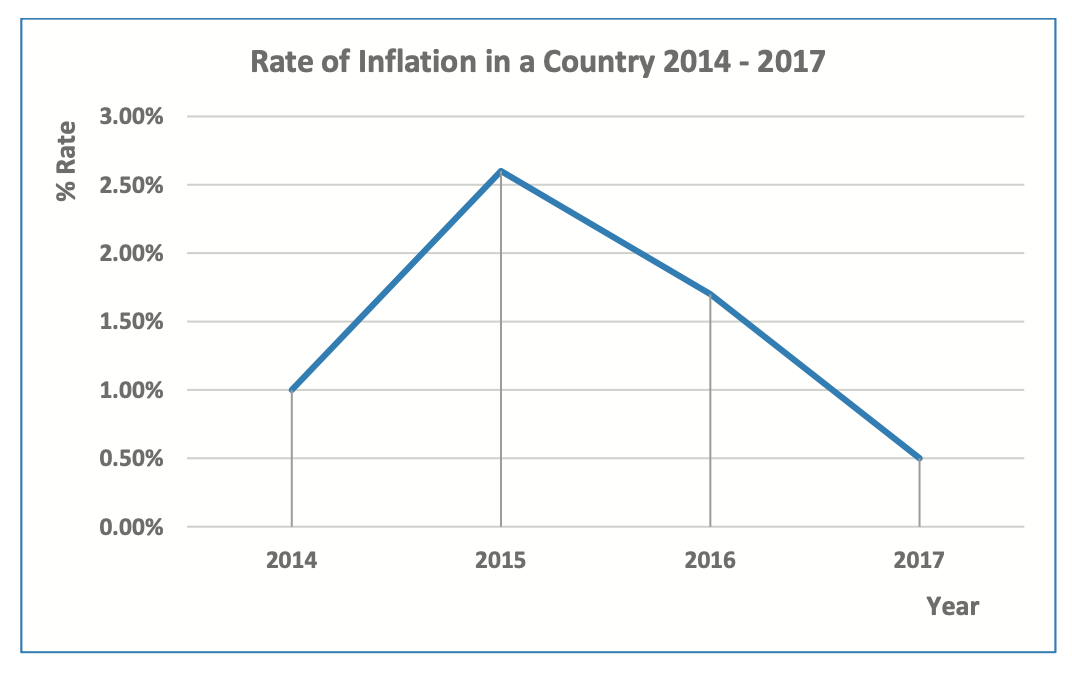
2019 Sample Q2 inflation graph

(a) Which year has the highest rate of inflation? (b) State one way a large increase in inflation may affect consumers.

(a) 2015 (inflation rate of 2.5%)

(b) Inflation would reduce a consumer's purchasing power so they would not be able to buy as many goods or services as before, reducing their standard of living due to higher prices.
Top Tip: Show cause and effect. “Reduced purchasing power as prices are higher” → “lower standard of living”. One-word answers such as “stress” will not get full marks.
📄 2019 Paper — Q18(c) 12m
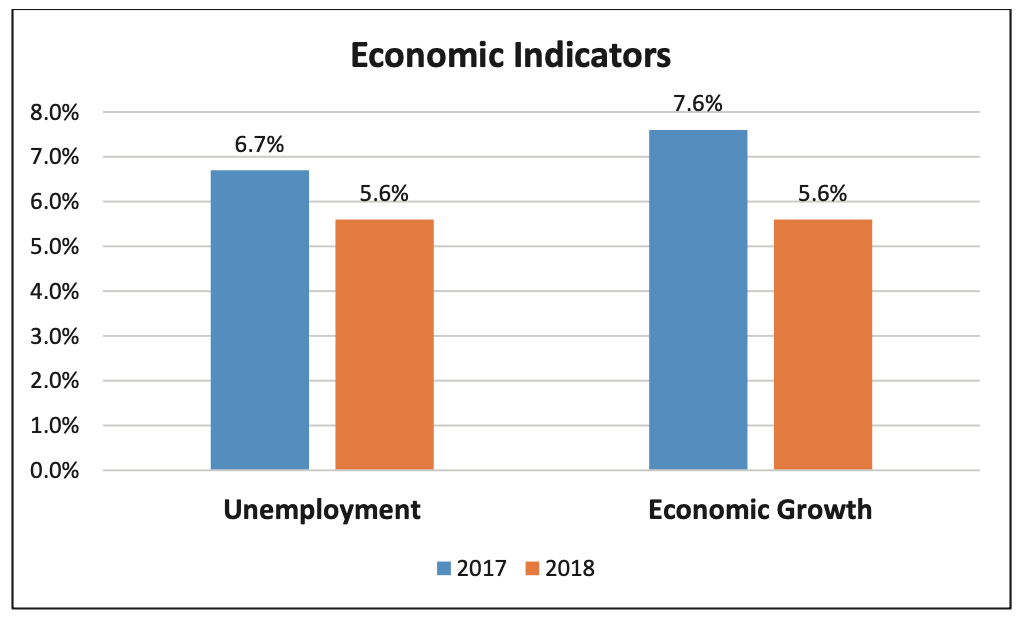
2019 Q18c unemployment and economic growth chart

(i) Indicate if the change in unemployment and economic growth is a good or bad trend. (ii) Explain the impact of the unemployment trend on individuals and the economy.

(i)
Economic IndicatorGood TrendBad Trend
Unemployment✓ (fell from 6.7% to 5.6%)
Economic Growth✓ (fell from 7.6% to 5.6%)
(ii) Impact on individuals: It will be easier for individuals to find a job which will improve their standard of living. (2m)
Impact on the economy: There will be an increase in tax revenue for the government. The government will need to spend less on social welfare payments for the unemployed. (2m)
Top Tip: “Higher house prices” alone = 1 mark. “Incomes increase as more people are in work, leading to higher house prices as more people can afford to buy a house” = 2 marks. Always show cause → effect.
📄 2022 Paper — Q7 6m

(i) What is interest? (ii) Outline one reason why low interest rates encourage borrowing.

(i) Saving: Interest is the reward given by a financial institution for saving money with them.
Borrowing: Interest is the financial cost (fee) of borrowing money.
Interest is generally expressed as a percentage, such as an annual percentage rate (APR).

(ii) When interest rates are low it means the cost of borrowing is low. Individuals and businesses will be more likely to borrow money because they will not have to pay back as much money when interest rates are low, meaning lower repayments.
Top Tip: Either the saving or borrowing explanation is fine for part (i). For part (ii), a two-prong answer is needed: lower rates → lower repayments → more affordable = 3 marks.
📄 2022 Paper — Q14 6m
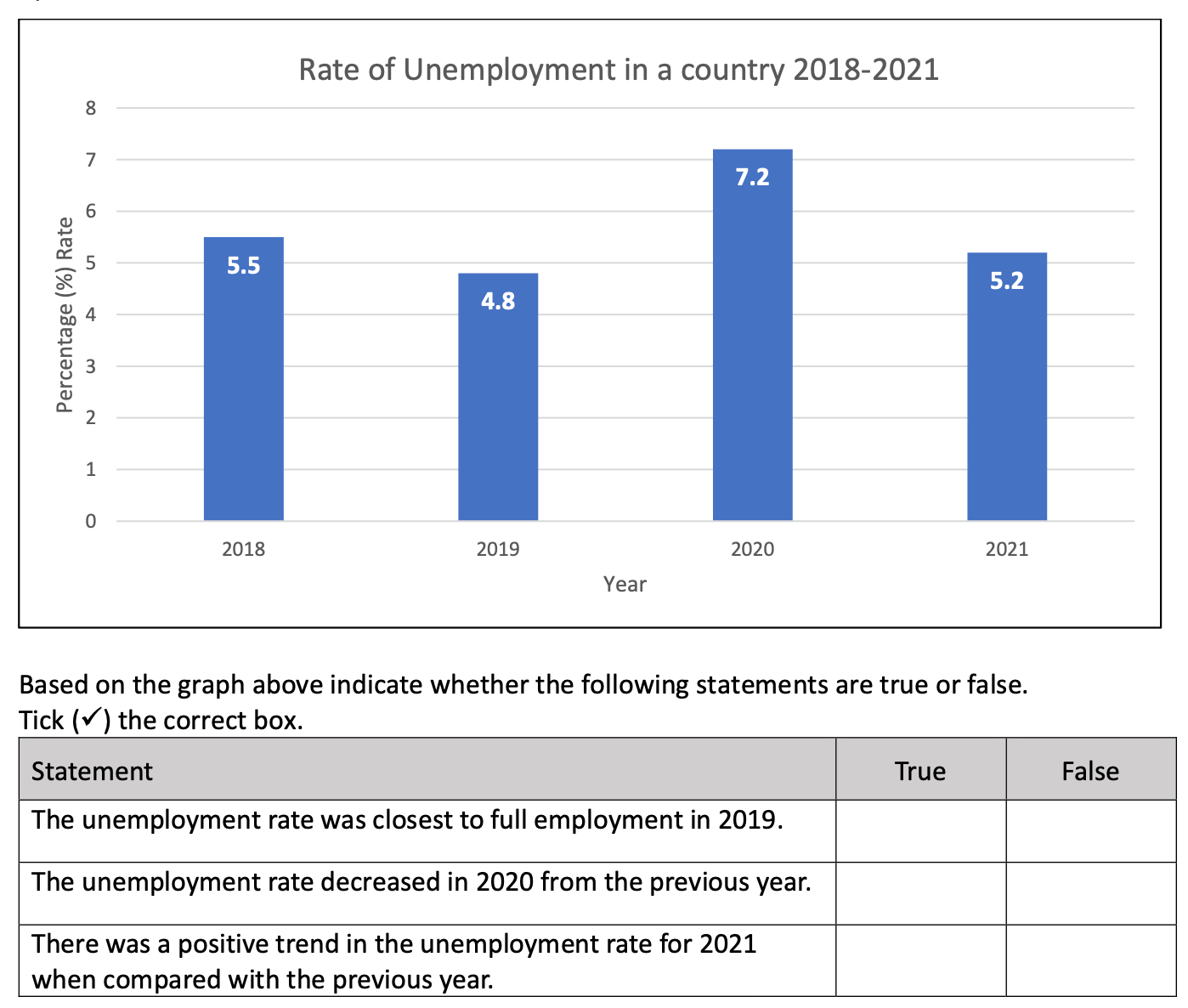
2022 Q14 unemployment rate chart 2018-2021

Based on the graph, indicate whether the following are True or False: (1) Closest to full employment in 2019. (2) Unemployment decreased in 2020. (3) Positive trend in 2021 vs 2020.

StatementTrueFalse
Closest to full employment in 2019
Unemployment decreased in 2020
Positive trend in 2021 vs 2020
Top Tip: A “positive trend” for unemployment means unemployment fell. It went from 7.2% (2020) to 5.2% (2021) which is a fall, so it is a positive trend.
📄 2023 Paper — Q18(a) 12m
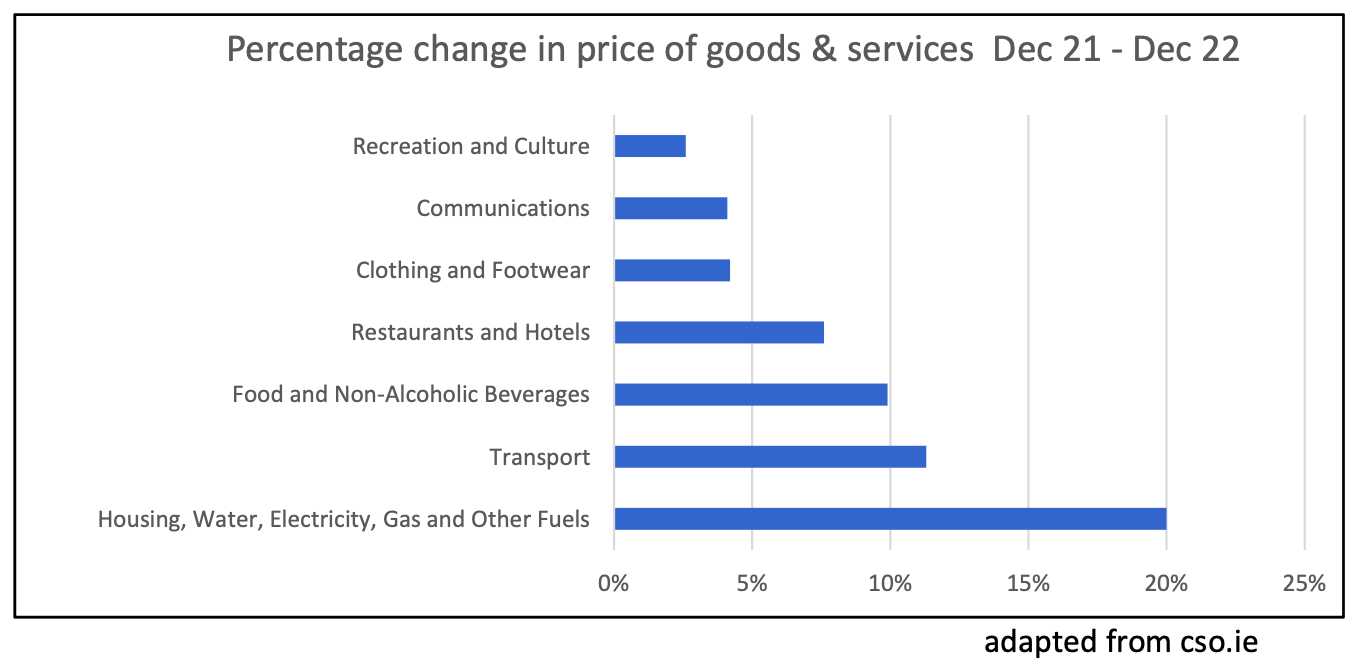
2023 Q18a percentage change in prices chart

(i) Largest price increase category? (ii) State the official measure of inflation. (iii) Explain one impact of rising inflation on an individual and a business.

(i) Housing, Water, Electricity, Gas and Other Fuels (5m)
(ii) Consumer Price Index (3 x 1m)
(iii) Individual: It costs an individual more to buy what they normally buy so they will have less disposable income and they may now struggle to pay for some of their bills. (2m)
Business: It may lead to a business becoming less competitive as they may put their prices up due to higher costs of production. (2m)
Top Tip: “Explain” means one/two word answers will not get full marks. “Stress” for individual or “less profits” for business are not enough. You must show cause → effect.
📄 2024 Paper — Q5 6m
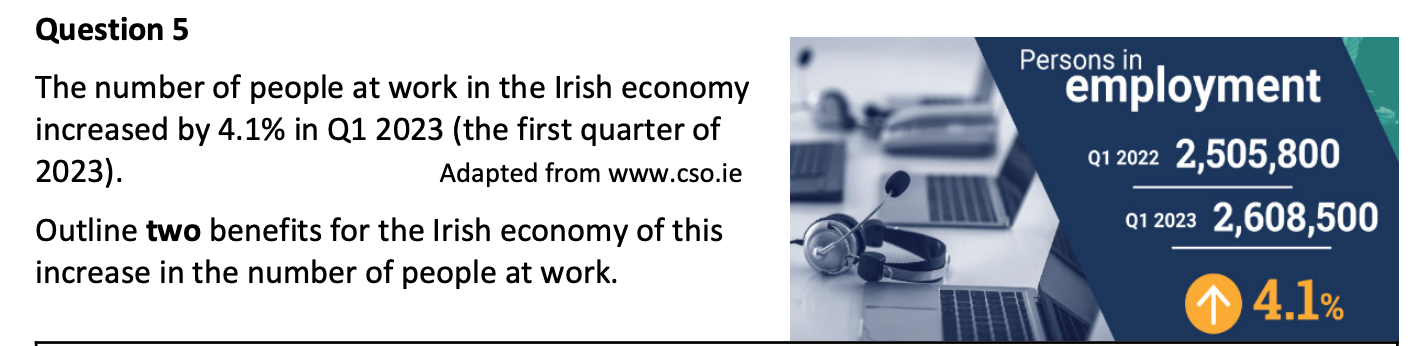
2024 Q5 CSO employment infographic

Outline two benefits for the Irish economy of the increase in people at work.

1. More people at work means there will be more tax revenue for the government such as PAYE, PRSI and USC. This extra revenue can be used to provide better public services such as health and education.

2. If more people are working, the government will spend less on social protection payments such as Jobseeker's Allowance. The government has greater spending power for other public services.
Top Tip: Use “higher/lower” or “more/less” or “increased/decreased” to show the benefit, then explain how the benefit occurs because of more people in work. Give specific examples such as PAYE or healthcare.
📄 2025 Paper — Q3 6m
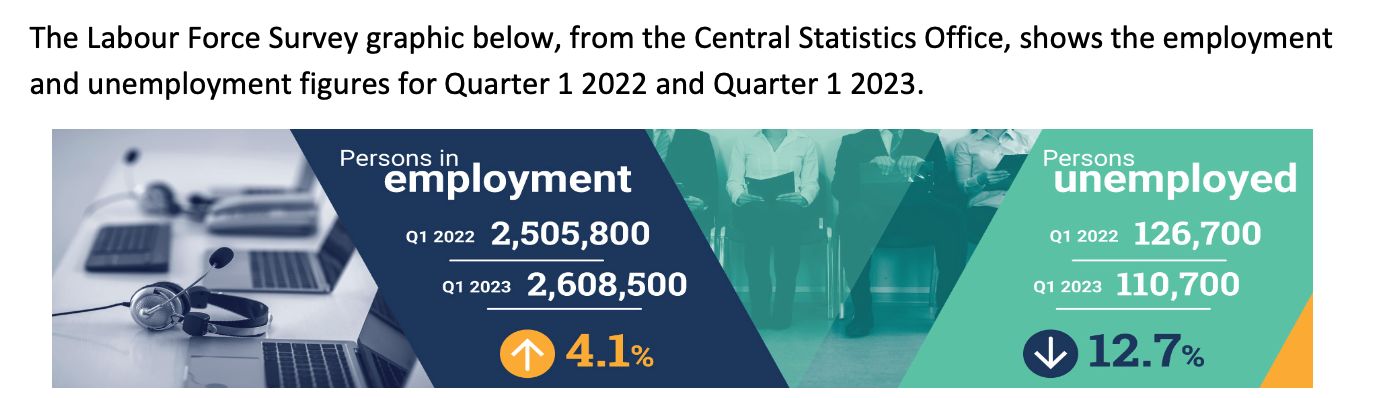
2025 Q3 CSO Labour Force Survey infographic

(i) What does the infographic show about the change in employment? (ii) Outline one benefit to the economy.

(i) Employment has risen by 4.1%. It increased from 2,505,800 to 2,608,500, an increase of 102,700 people.

(ii) More income tax collected (PAYE revenue) for the government, which the government then uses on improving or providing public facilities and services.
Top Tip: Use a figure from the infographic or data provided. Then give the benefit and what the government can do with it, with specific examples.
📄 2025 Paper — Q16(c)(iii) 6m

The ECB interest rates rose to a 22-year high in 2022. Describe one impact of a rise in interest rates on: (a) Savings (b) Borrowing.

Savings: Increase in savings due to higher return on investment. People may move cash from risky investments to savings accounts because of the higher reward.

Borrowing: Decrease in borrowing as borrowing will cost more to repay. Higher repayments mean loans and mortgages become more expensive.
Top Tip: Show the impact, then explain why higher interest rates cause it. Savings and borrowing are separate answers and each must have its own explanation.
📄 2025 Paper — Q18(c)(i)&(ii) 8m
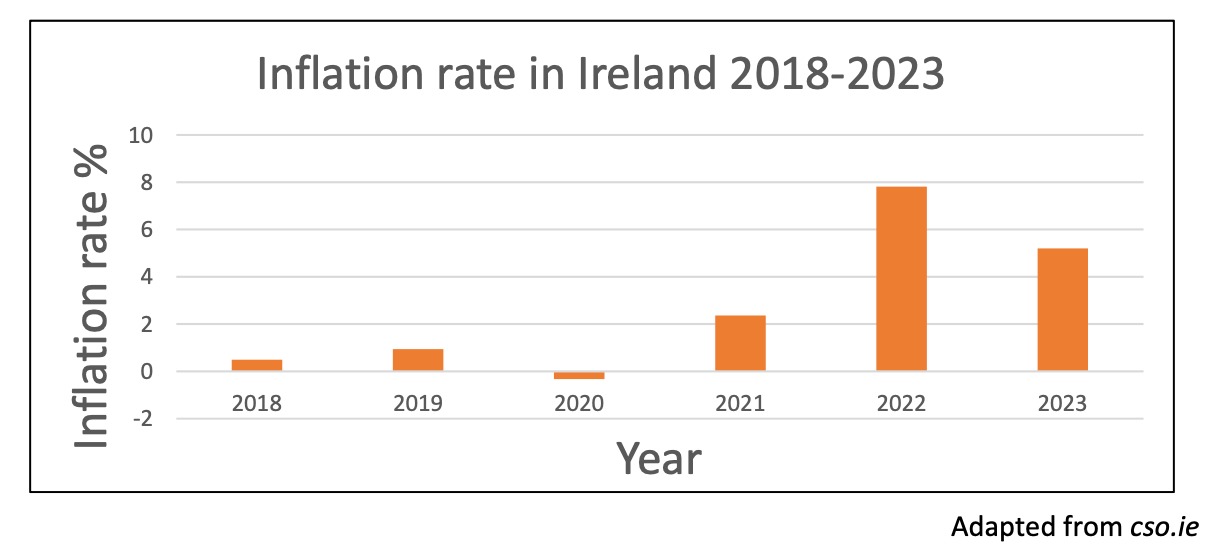
2025 Q18c inflation rate Ireland 2018-2023 chart

(i) What year had the highest inflation rate? (ii) Explain one cause of inflation.

(i) 2022 (5m)

(ii) Demand-pull: Demand exceeds supply, creating scarcity which increases the price of goods and services.
Cost-push: When there is an increase in production costs such as wages or energy, the cost increase is likely to be passed onto the consumer, leading to an increase in price.
Government-induced: An increase in indirect taxes such as VAT may increase the price of a product.
Top Tip: “Brexit” or “Covid” alone = 1 mark only. You must explain how the event caused prices to rise for full marks. The marking is (3,2,0): name the cause, then link it to rising prices.

Related Content

Scroll to Top