
Chapter 5: Saving and Borrowing for a Household
David and Linda Evans live in Tralee, Co. Kerry with their three children. David is a teacher and Linda is a paramedic. They want to save for their children's future education.
Reason: Savings earn interest, which means the amount saved increases in value each year.
Financial Institution 2: Credit Union
Reason: Regular saving with a credit union builds a positive record with them, which makes it easier to get a loan from them in the future.
Other acceptable institutions: An Post, Building Society. Other acceptable reasons: Deposits are protected by the Deposit Guarantee Scheme (Commercial Bank). Some accounts are exempt from DIRT (An Post).
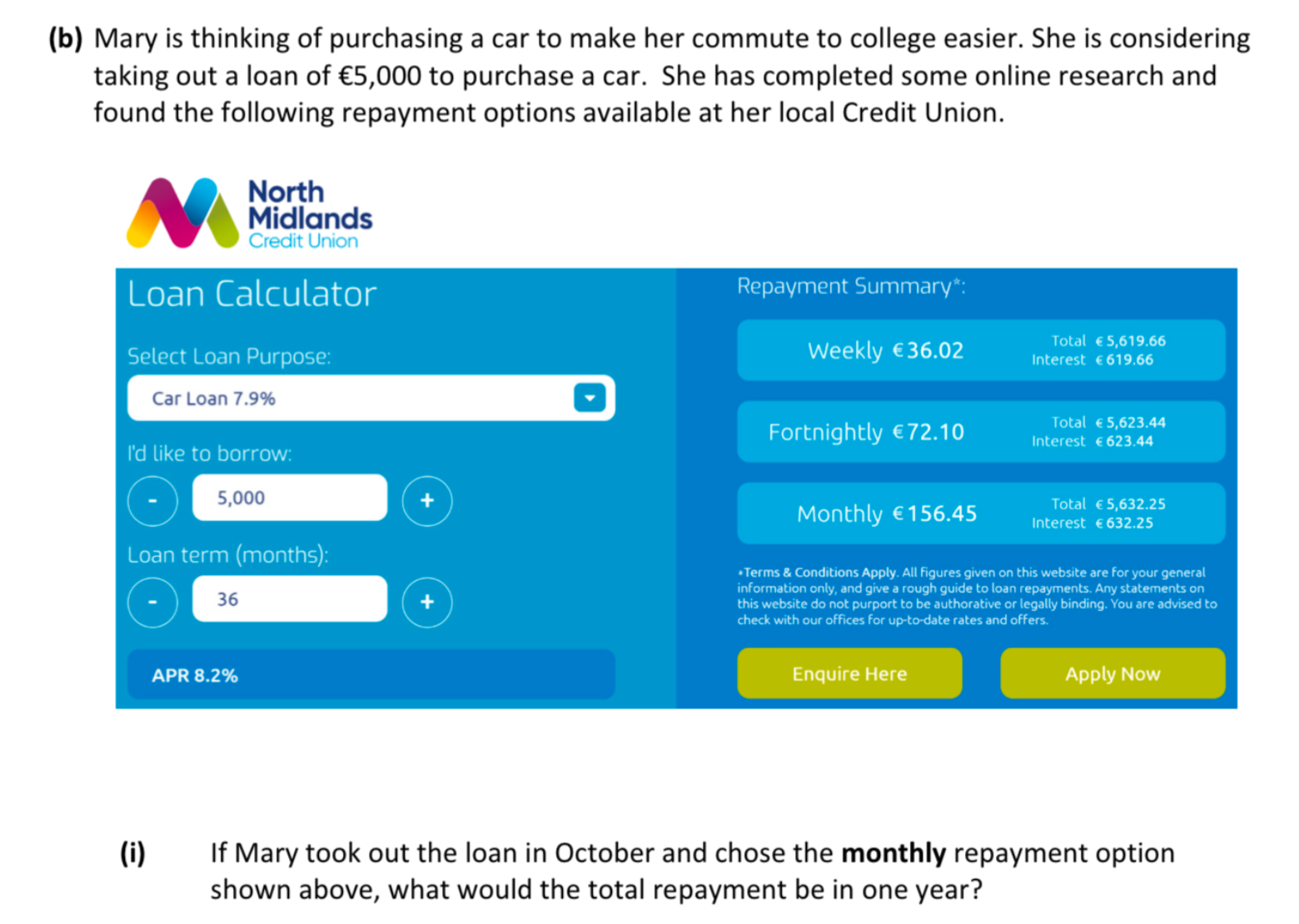
Mary is thinking of purchasing a car to make her commute to college easier. She is considering taking out a loan of €5,000. The credit union shows monthly repayments of €156.45 over 36 months.
Interest paid: €5,632.20 - €5,000 = €632.20
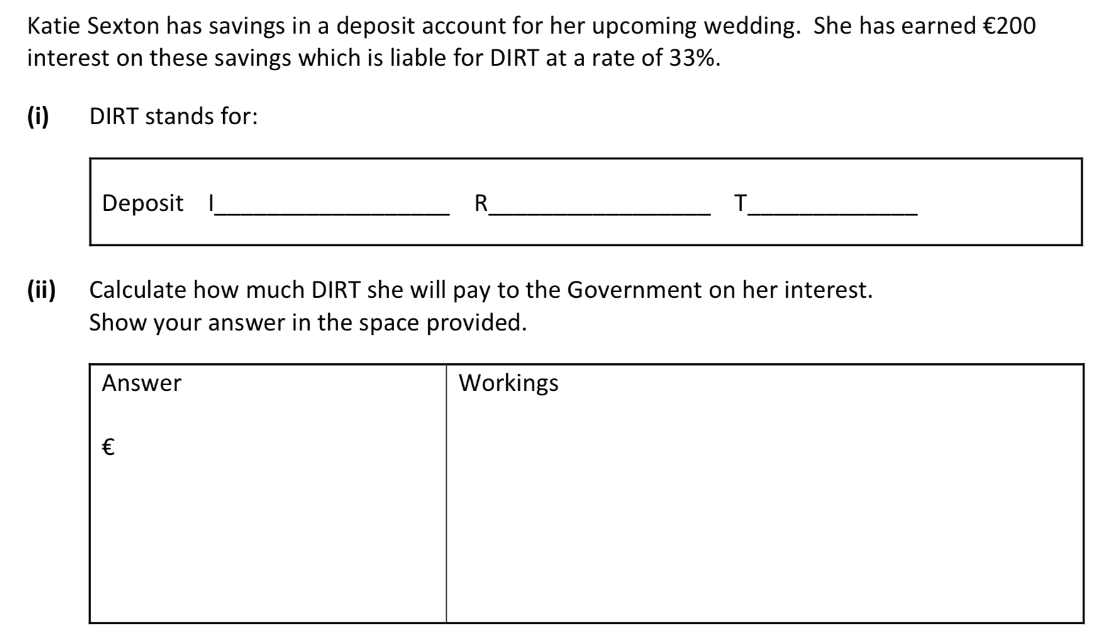
Katie Sexton has savings in a deposit account for her upcoming wedding. She has earned €200 interest on these savings, which is liable for DIRT at a rate of 33%.
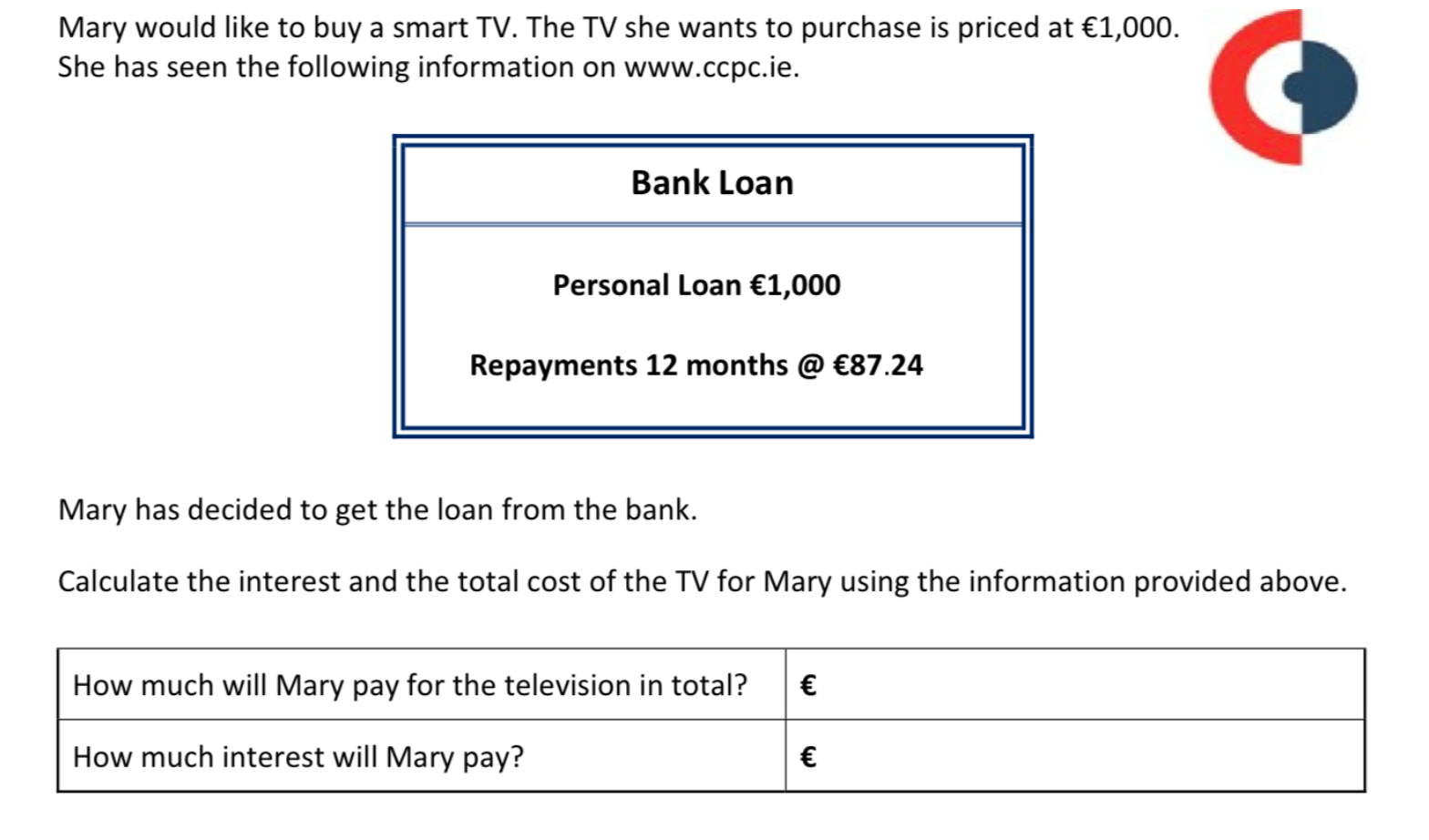
Mary would like to buy a smart TV priced at €1,000. She has seen a bank loan offer on www.ccpc.ie: Personal Loan €1,000, repayments 12 months at €87.24 per month.
Interest paid: €1,046.88 - €1,000 = €46.88
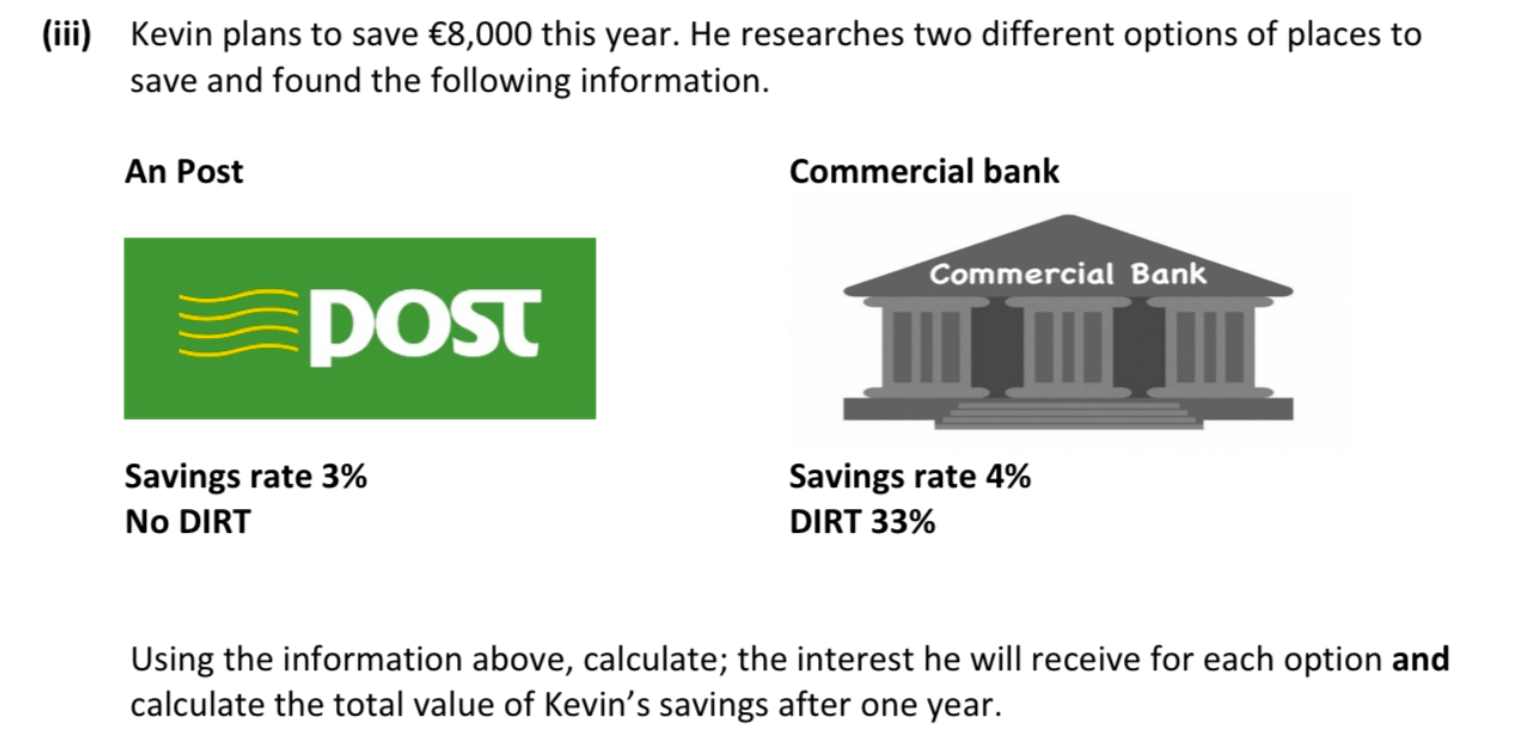
Kevin has a steady income and has decided to start saving. He plans to save €8,000 and has researched two options: An Post (savings rate 3%, no DIRT) and a Commercial Bank (savings rate 4%, DIRT 33%).
1. For future planned expenditure (such as a family event or buying a car)
2. For emergencies or unplanned events (such as in case a car breaks down)
3. To earn interest on savings
4. To provide income in retirement
5. To improve a credit rating
Interest: €8,000 x 3% = €240
Total savings: €8,000 + €240 = €8,240
Commercial Bank:
Interest: €8,000 x 4% = €320
DIRT: €320 x 33% = €105.60
Interest after DIRT: €320 - €105.60 = €214.40
Total savings: €8,000 + €214.40 = €8,214.40
When interest rates are high, it encourages saving. When interest rates are low, it encourages borrowing.
Borrowing: Interest is the financial cost charged by a financial institution for borrowing money.
Interest is usually expressed as a percentage, such as an Annual Percentage Rate (APR).
| Purchase | Source of Finance |
|---|---|
| House | (your answer) |
| Car | (your answer) |
| Groceries | (your answer) |
Car: Hire Purchase / Medium-term loan
Groceries: Credit card / Bank overdraft