
HUB
Economic Indicators
LO 3.9
② Explain the impact of a change in an economic indicator on individuals, businesses or the economy
③ Define or explain an indicator, how it is measured, or what causes it
Most tested: Employment (4 times), Inflation (3 times), Interest Rates (2 times), Economic Growth (1 time)
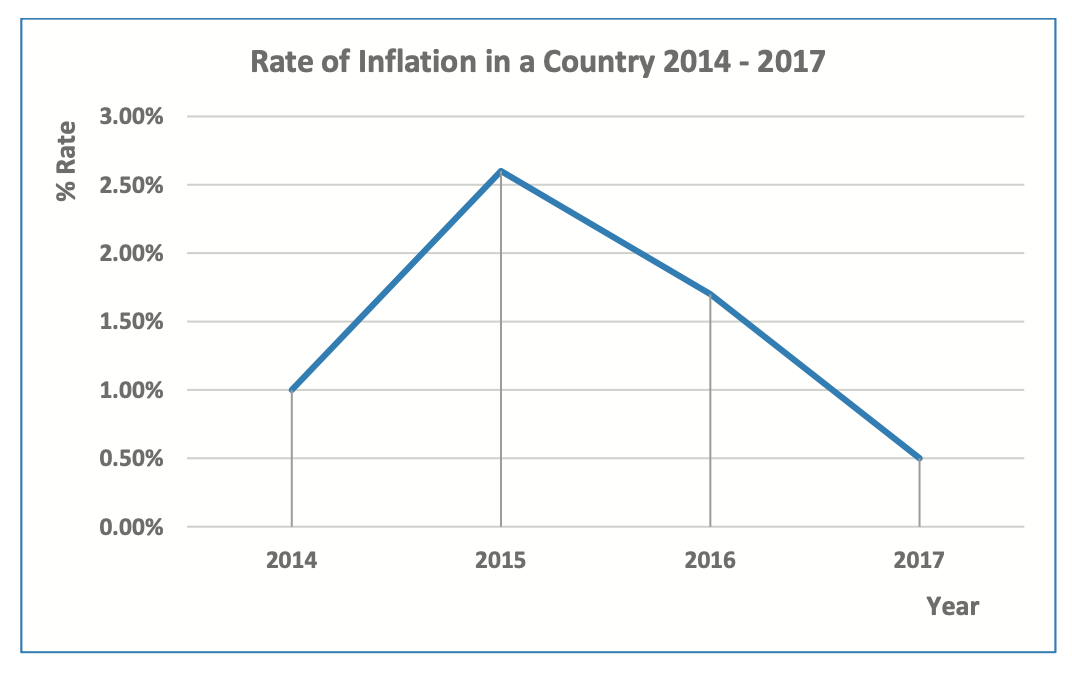
(a) Which year has the highest rate of inflation? (b) State one way a large increase in inflation may affect consumers.
(b) Inflation would reduce a consumer's purchasing power so they would not be able to buy as many goods or services as before, reducing their standard of living due to higher prices.
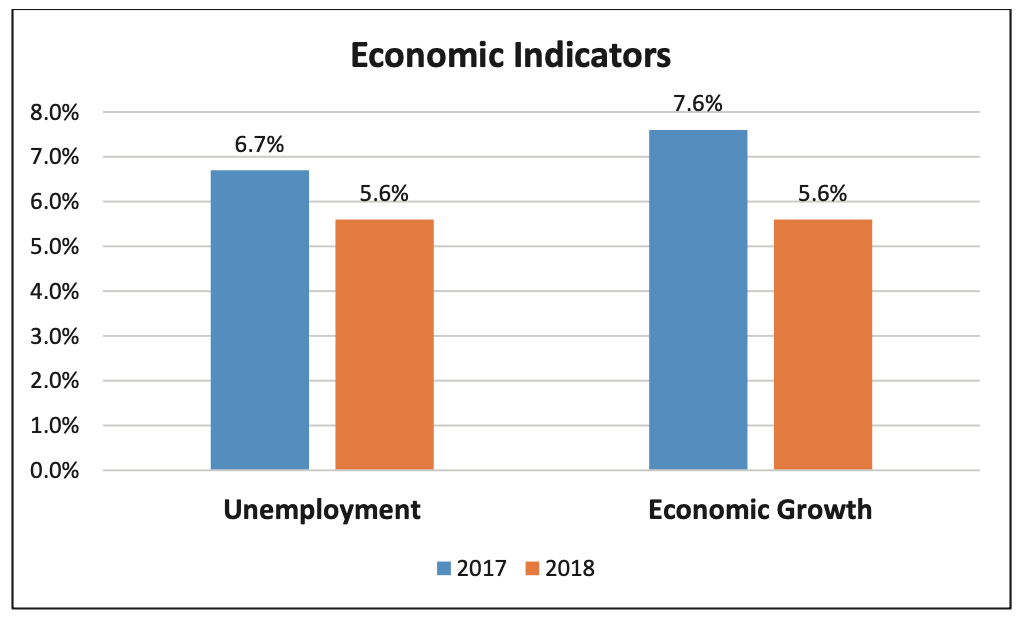
(i) Indicate if the change in unemployment and economic growth is a good or bad trend. (ii) Explain the impact of the unemployment trend on individuals and the economy.
| Economic Indicator | Good Trend | Bad Trend |
|---|---|---|
| Unemployment | ✓ (fell from 6.7% to 5.6%) | |
| Economic Growth | ✓ (fell from 7.6% to 5.6%) |
Impact on the economy: There will be an increase in tax revenue for the government. The government will need to spend less on social welfare payments for the unemployed. (2m)
(i) What is interest? (ii) Outline one reason why low interest rates encourage borrowing.
Borrowing: Interest is the financial cost (fee) of borrowing money.
Interest is generally expressed as a percentage, such as an annual percentage rate (APR).
(ii) When interest rates are low it means the cost of borrowing is low. Individuals and businesses will be more likely to borrow money because they will not have to pay back as much money when interest rates are low, meaning lower repayments.
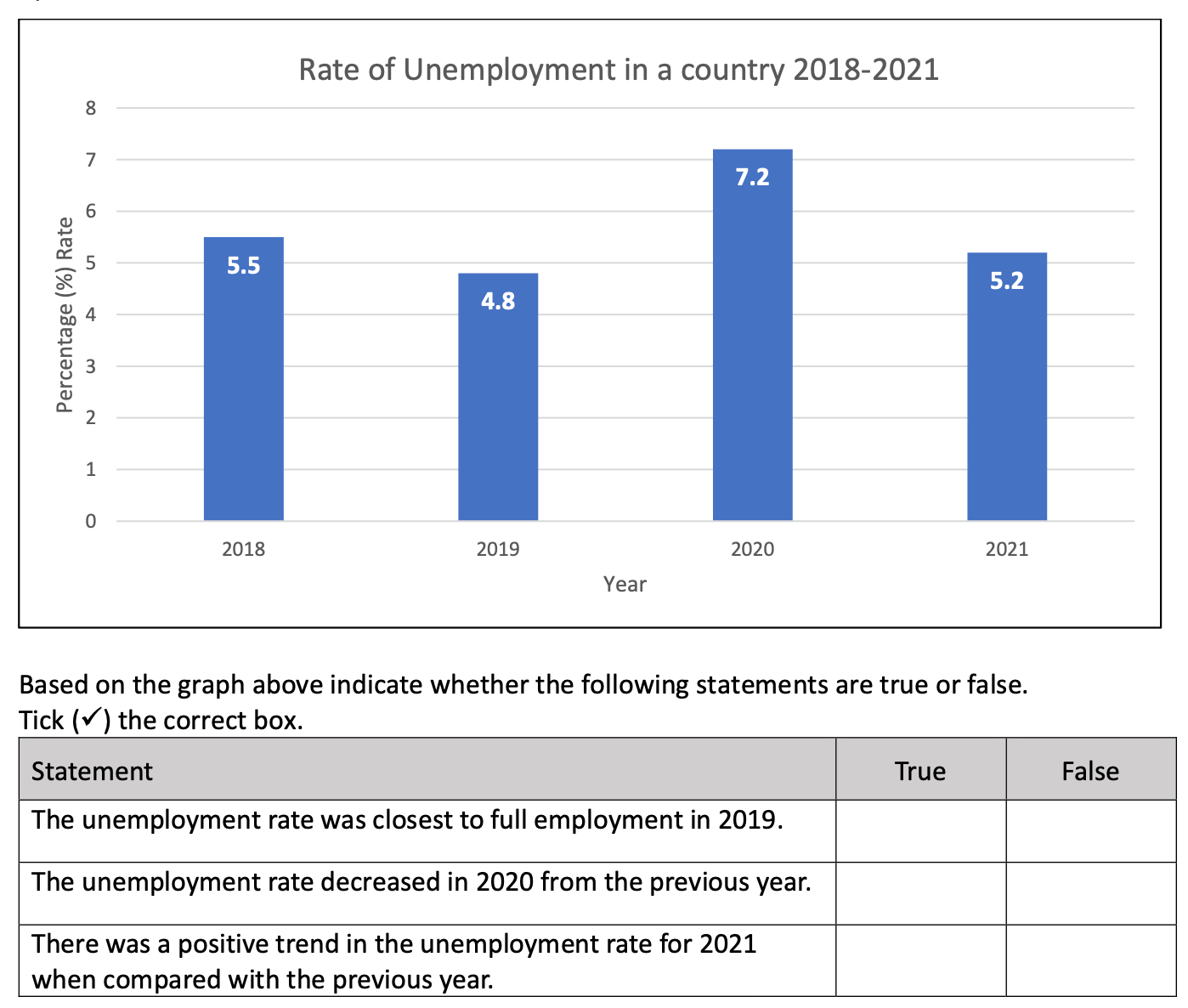
Based on the graph, indicate whether the following are True or False: (1) Closest to full employment in 2019. (2) Unemployment decreased in 2020. (3) Positive trend in 2021 vs 2020.
| Statement | True | False |
|---|---|---|
| Closest to full employment in 2019 | ✓ | |
| Unemployment decreased in 2020 | ✓ | |
| Positive trend in 2021 vs 2020 | ✓ |
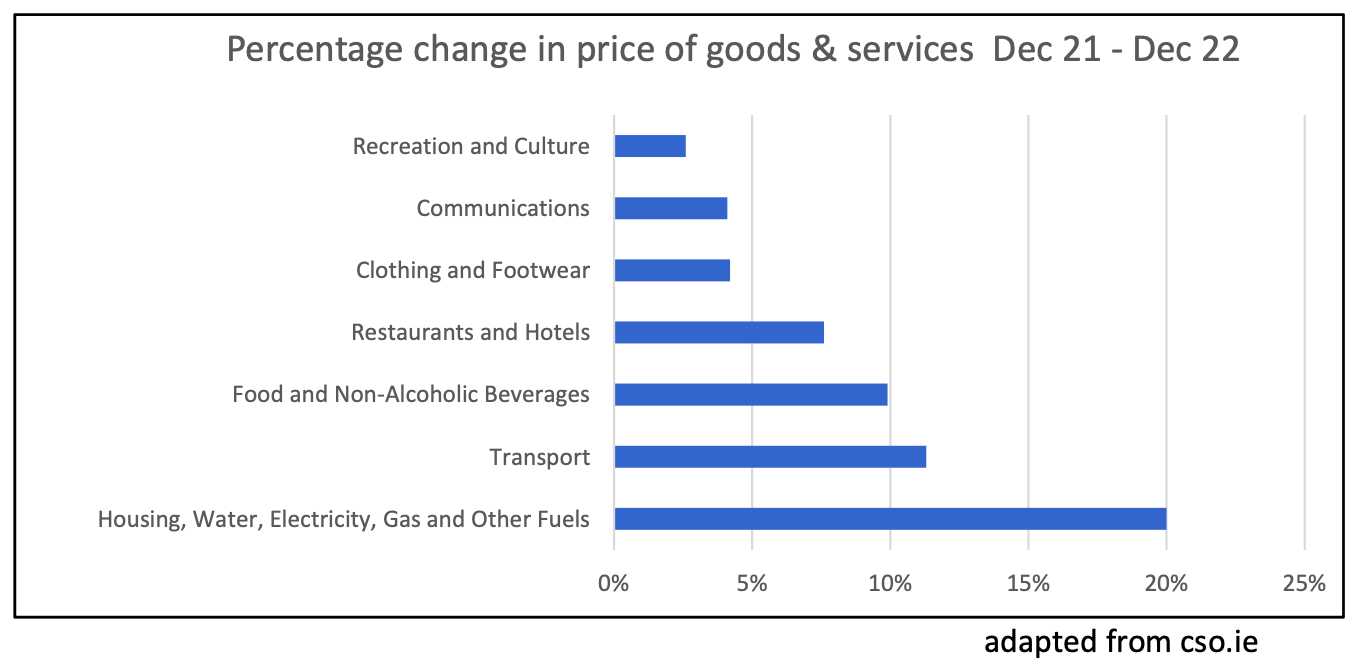
(i) Largest price increase category? (ii) State the official measure of inflation. (iii) Explain one impact of rising inflation on an individual and a business.
(ii) Consumer Price Index (3 x 1m)
(iii) Individual: It costs an individual more to buy what they normally buy so they will have less disposable income and they may now struggle to pay for some of their bills. (2m)
Business: It may lead to a business becoming less competitive as they may put their prices up due to higher costs of production. (2m)
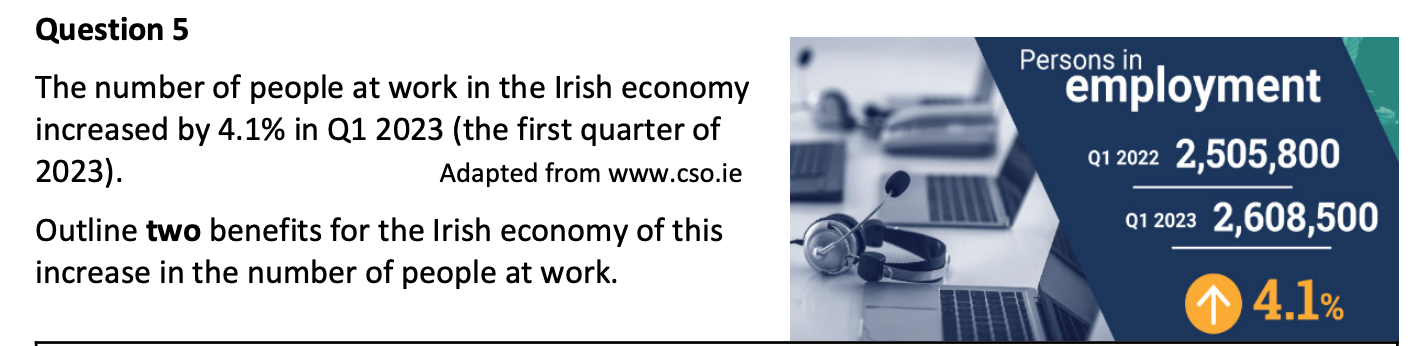
Outline two benefits for the Irish economy of the increase in people at work.
2. If more people are working, the government will spend less on social protection payments such as Jobseeker's Allowance. The government has greater spending power for other public services.
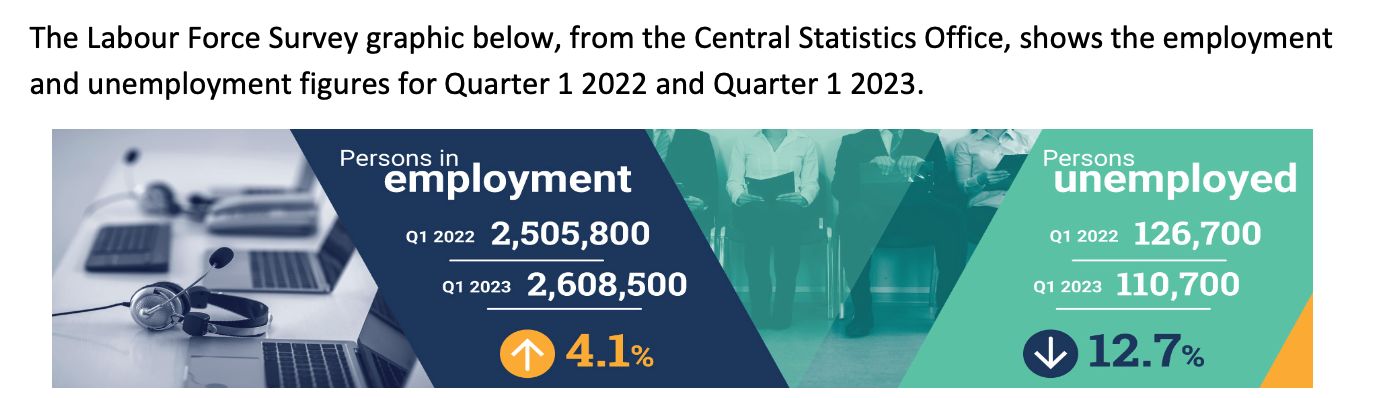
(i) What does the infographic show about the change in employment? (ii) Outline one benefit to the economy.
(ii) More income tax collected (PAYE revenue) for the government, which the government then uses on improving or providing public facilities and services.
The ECB interest rates rose to a 22-year high in 2022. Describe one impact of a rise in interest rates on: (a) Savings (b) Borrowing.
Borrowing: Decrease in borrowing as borrowing will cost more to repay. Higher repayments mean loans and mortgages become more expensive.
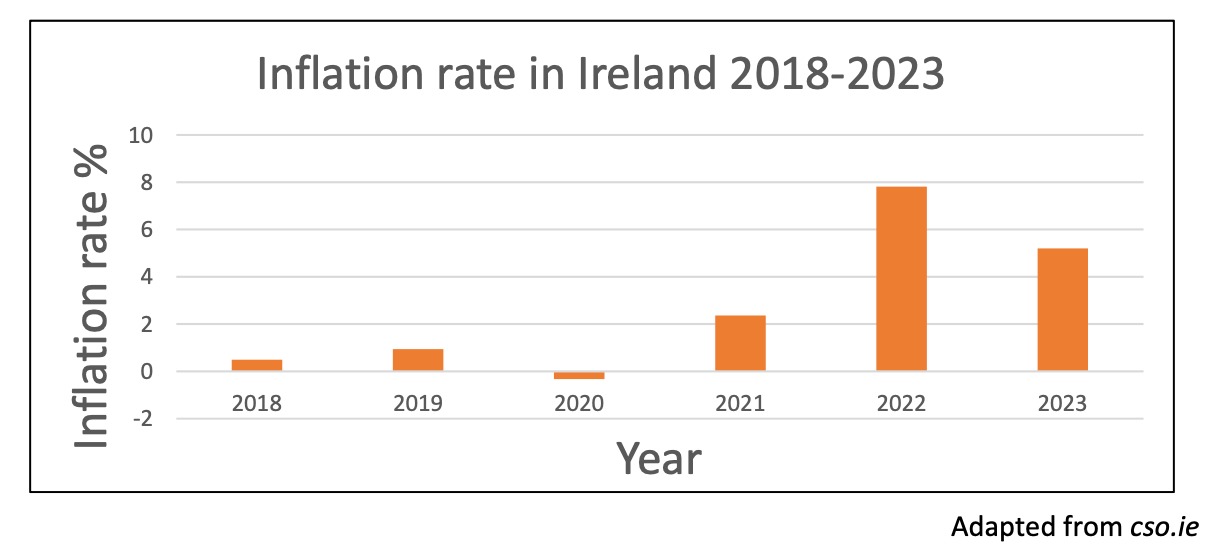
(i) What year had the highest inflation rate? (ii) Explain one cause of inflation.
(ii) Demand-pull: Demand exceeds supply, creating scarcity which increases the price of goods and services.
Cost-push: When there is an increase in production costs such as wages or energy, the cost increase is likely to be passed onto the consumer, leading to an increase in price.
Government-induced: An increase in indirect taxes such as VAT may increase the price of a product.